WRITING / 2026.06.27 · ESSAY · SUBSTACK · 3 MIN
Intelligence Wants to Be Free
Decentralized intelligence will not win in the same format as the one we’re being served by the large foundation labs.
Cite as Christian Catalini, “Intelligence Wants to Be Free,” Substack, June 2026. catalini.substack.com ↗
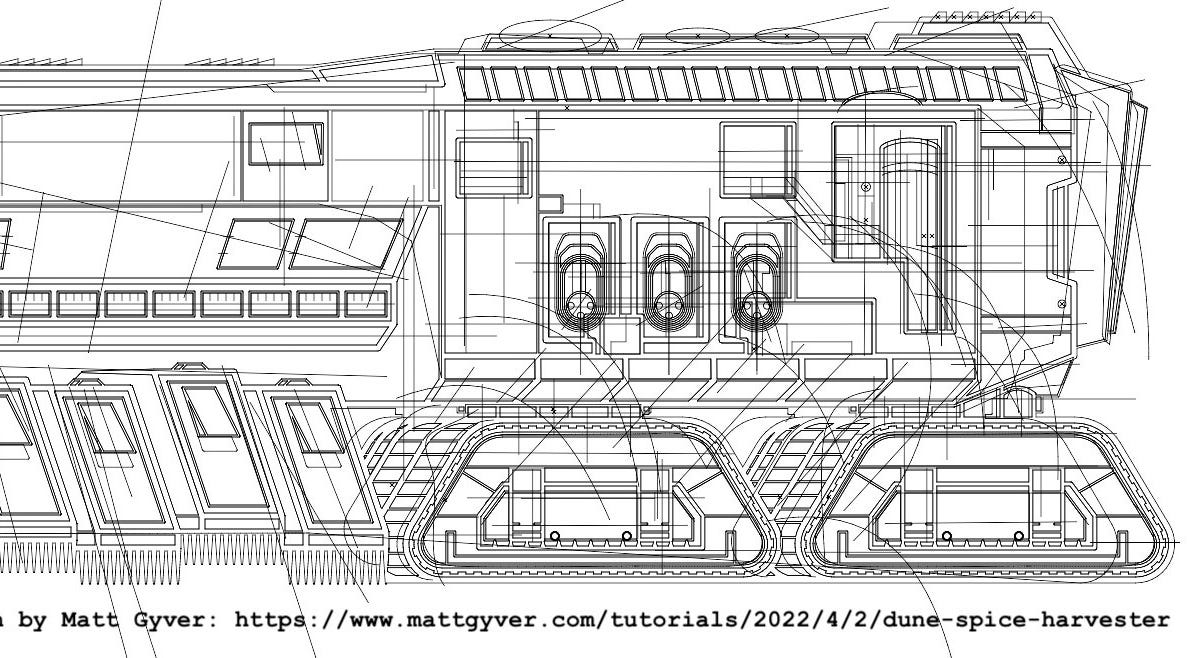
FIG. 01 — DECENTRALIZED INTELLIGENCE WILL NOT WIN IN THE SAME FORMAT AS THE ONE WE’RE BEING SERVED…
We’re at a fork in the road. One path leads to the rapid and irreversible bureaucratization of intelligence. Government approval, absent clear and technically sound guidelines, becomes a way to pick winners, erect barriers to entry, and give labs someone to blame if a model goes rogue. The alternative path is one where we battle to retain distributed and market-driven access to intelligence, capabilities are widely distributed, and the battle is fought in the market rather than in Washington D.C.
And while ultimately intelligence will want to be free (free as in speech, not as in beer), and the arc will bend towards openness, we could face a long, dark period of an intelligence caste system. Deciding who gets to use frontier intelligence and who doesn’t is simply too much power for any single company or administration to wield unilaterally. The economic rents that would follow from that power would undo the key assumption of free-market economies that talent, effort and ingenuity map (even with friction and imperfection) to the ability to succeed. It would land the United States in a model that is much more similar to the planned economy of its challenger, China.
Capitalism requires that the decentralized and voluntary exchange in free markets is able to organize resources, drive human ingenuity and innovation, and ultimately guarantee societal welfare better than any form of centralized planning, no matter how smart, AI-augmented, or well-intended altruist.
But a world where frontier intelligence is not voluntarily available to market participants is one where this assumption falls apart. It is one where the profit motive is replaced by favor, influence and access to the spice.
Some have called for a rebel alliance. But the problem with rebel alliances is that they are hard to organize, and often confuse faith in ideas such as decentralization and openness without challenging the alternative from first principles.
Early crypto made exactly the same mistakes. We made exactly the same mistakes when we tried to build Libra, only to brace for impact after regulators did to our naive ideas for decentralization what they are doing right now to Anthropic and OpenAI. For decades, proponents of stronger privacy and control over your data made the same mistake in trying to challenge the large, two-sided social media platforms and their network effects.
And I’ve made the same mistake. Yes, it is true open networks do eventually win, but this typically happens in unexpected ways and never in the format that resembles the format of the centralized alternative. Linux did not win on the desktop, it had to wait for the cloud.
Decentralized intelligence will not win in the same format as the one we’re being served by the large foundation labs. It will not win by trying to acquire context and digital traces of your work inside your company Slack or by watching your computer use. It will not win by collecting unique data at scale through the relentless acquisition of incumbents with fragile business models beyond their historical archives.
Decentralized intelligence will win by playing to its strengths.
The fact that despite truly magical model capabilities, every human still has something to contribute. The “weights” we all carry in our brain, shaped by the unique set of experiences we’ve all accumulated and mistakes we’ve made, are still unmeasured. While we’re slowly leaking bits of it with each interaction with AI, they’re still ours.
The fact that despite the massive temptation to deploy AI across every firm as fast as possible to not fall behind your competitors, some CEOs are realizing that the feedback and verification loops that are shaped every day by their top talent and accumulated experience are worth defending and owning.
The fact that despite models being magical, they are not the defensible product anymore. Smart harnesses, more focused domain data, verification infrastructure, evals and expertise can deliver us the same results in a more distributed, market-driven way.
The fact that ideas are in the air, and open source models are not far behind. Yes, the government may try to limit access to your weights, the same way it once tried to limit, and failed, access to self-custody of value.
Intelligence wants to be non-custodial.
Intelligence wants to be free.
We just have to figure out how.
A version of this article appeared on Substack.